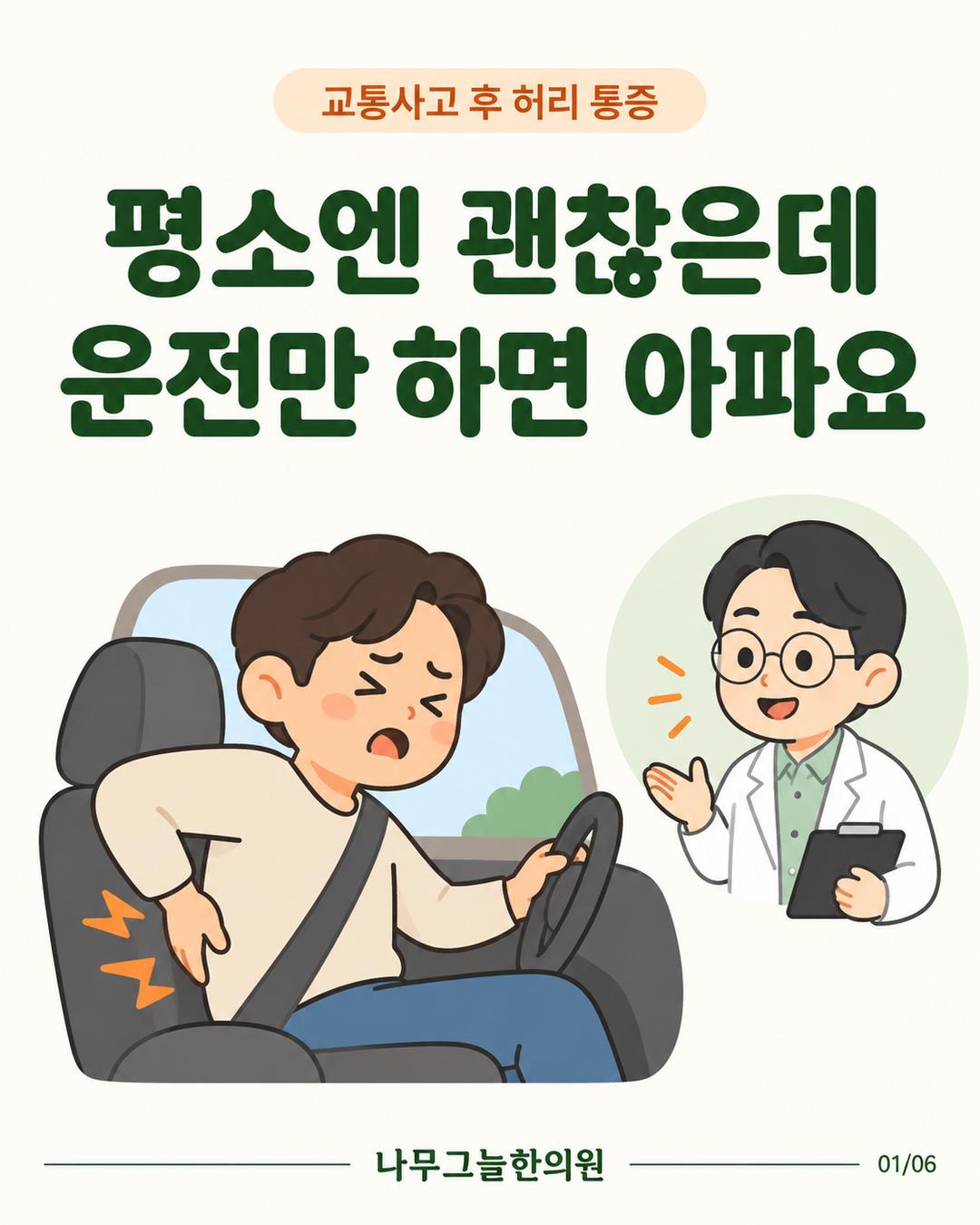
Back pain only when driving after a traffic accident?
Pain that appears only when driving after an accident can reflect sustained sitting, seat position and painful movements. The cause is not the same for everyone: we also assess how symptoms changed after the accident and whether there is leg numbness or weakness.
Support your back and pelvis and adjust the seat so you can reach the pedals and steering wheel without stretching or lifting your back away from the backrest. Preserve clear vision, correct seatbelt use and safe pedal control; make adjustments while parked.
If pain increases with sitting, shorten each driving period and stop safely before pain builds. Walk gently within comfort, without forceful twisting or stretching. Do not keep driving if pain or leg symptoms interfere with accurate braking.
Vehicle seat and suspension condition, driving time and road surface can influence vibration and jolts. Mention rough roads or prolonged uncomfortable vibration at your visit. HSE guidance discusses posture, seating, vibration magnitude and exposure duration mainly for occupational drivers and machinery operators.
The cover contains Korean text. The article below provides the information in English.
02
When does it hurt?
Pain on first sitting, after a long drive, when standing up or getting out of the car provides different clues. We ask where it hurts and whether pain spreads into the buttock or leg. If getting out hurts, move both legs toward the outside and change position slowly rather than twisting and jumping up. Do not repeatedly provoke pain to test yourself.
03
Does leg numbness always mean a disc problem?
A lumbar disc can irritate a nerve, but sciatic nerve irritation around the buttock, including piriformis syndrome, is another possibility. The distribution of numbness, worsening while sitting and loss of strength help guide assessment; symptoms alone do not establish a diagnosis.
X-rays show bones but do not reveal every disc or nerve problem. Persistent numbness or weakness after a normal X-ray may need further assessment or specialist tests. Follow-up also considers symptom changes and everyday function rather than assuming spontaneous recovery.
At Namugeuneul, we ask about walking, rising from sitting, bending and straightening, including uncomfortable movements you may not have mentioned. Suspected fractures, serious injury or nerve damage require appropriate further evaluation.
Acupuncture and electroacupuncture with herbal medicine
In a Korean study of 60 patients with low-back pain after traffic accidents, pain decreased over four weeks in both the acupuncture-plus-herbal-medicine group and the group receiving additional electroacupuncture. Electroacupuncture adds electrical stimulation through needles; both study groups also received herbal medicine.
In a study of 194 people with low-back pain lasting at least three weeks, six weeks of Chuna plus physical therapy and education improved pain and everyday function more at week seven than physical therapy and education alone. This was treatment combined with rehabilitation, rather than manipulation alone.
A comparative trial in 100 people with chronic low-back pain used ten sessions over five weeks. The pharmacopuncture group had a greater reduction in pain at week six than the physical-therapy group. Treatment selection also takes account of the injected preparation and the person's health.
Herbal medicine for continuing symptoms after an accident
A study of 40 people with symptoms persisting 8–24 weeks after traffic accidents compared integrated Korean medicine care with or without four weeks of additional herbal medicine. Overall post-accident symptoms improved more in the additional-herbal-medicine group at week five. Prescriptions consider accompanying symptoms, digestion, sleep and overall health.
New numbness, sensory loss or weakness in both legs, altered sensation around the perineum, difficulty urinating or changes in bowel or bladder control require urgent assessment. Severe back pain after a major accident or accompanying chest pain also needs emergency evaluation. Do not drive yourself: ask for help or call 119.
Rapidly developing leg weakness needs prompt assessment. Seek medical care for fever, feeling generally unwell or rapidly worsening pain. Persistent pain at rest or pain that is worse at night also deserves evaluation.
Even when daily life seems manageable, symptoms may appear during one particular movement. Tell us when pain begins during driving, whether getting out hurts and whether numbness continues afterwards. Early symptoms can become harder to recall later; the clinician will actively ask, assess and record relevant changes.
The aim is to reduce strain and recover comfortable everyday activity, following assessment of serious injury and nerve symptoms. Pain, sitting, walking and getting out of the car are reviewed together as treatment and activity are adjusted.