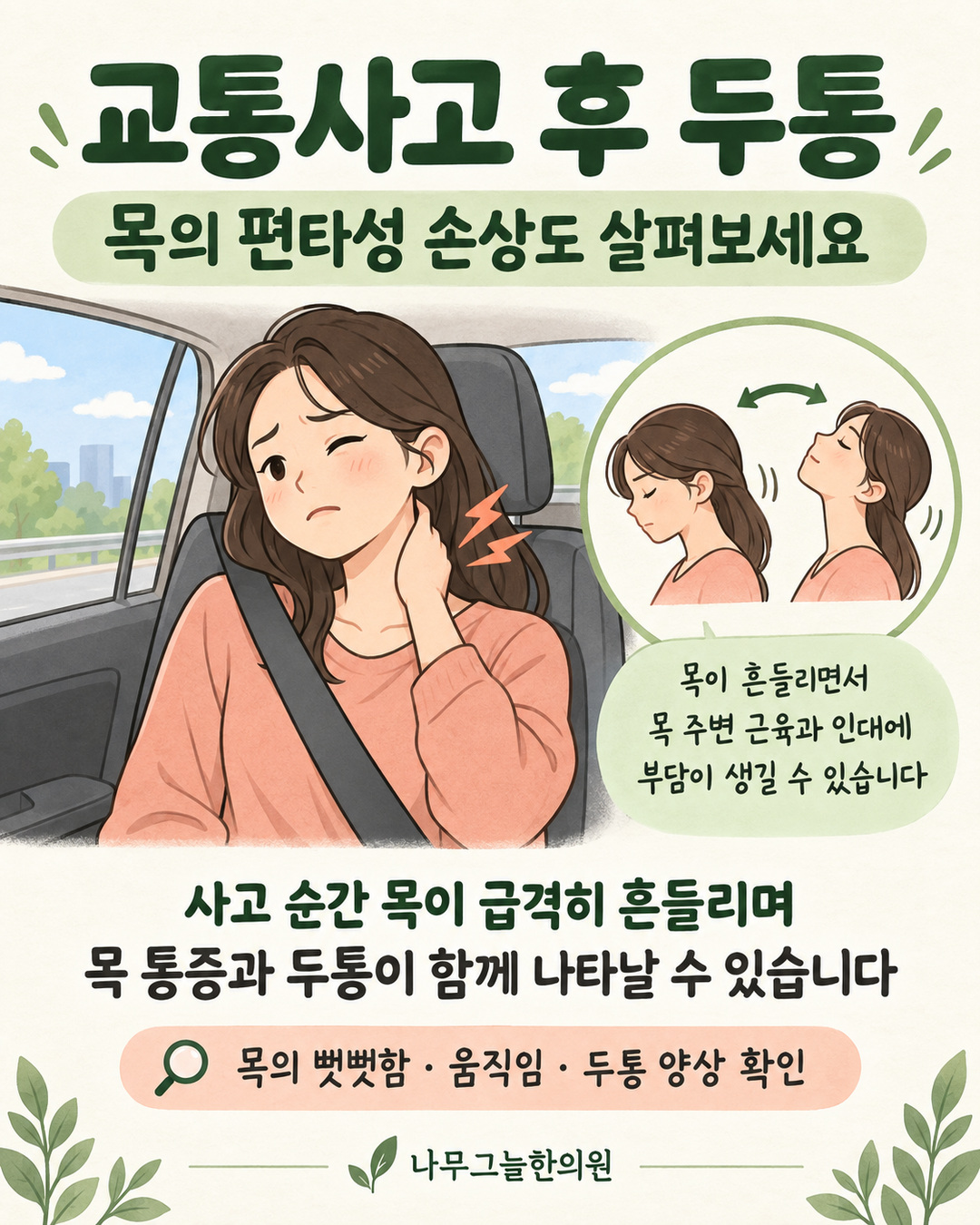
Headache and dizziness after a traffic accident: also assess whiplash
If a headache begins after a traffic accident, also check for neck pain and stiffness. Whiplash, a sudden back-and-forth movement of the neck, commonly accompanies headache. Describe the sensation and triggers of dizziness so its cause can be assessed.
At impact, the trunk and head may move at different speeds, causing the neck to whip back and forth and straining nearby muscles and ligaments. Neck pain, stiffness, shoulder discomfort and headache can occur together. Symptoms may become clearer several hours after the accident.
A 2020 systematic review and meta-analysis pooled studies of whiplash patients from non-population-based samples. Approximately 60% reported headache within seven days of the injury. This supports assessing neck injury and movement as part of a post-accident headache evaluation.
Original Korean illustration; please read the translated guidance below.
02
Describe the headache and neck symptoms
Report the location, such as the back of the head or temples, whether it feels pressing or throbbing, and how long an episode lasts. If you had headaches before the accident, compare their frequency and intensity before and afterward.
Observe neck stiffness and whether turning the neck or prolonged sitting changes the headache. Having both headache and neck symptoms does not by itself establish a cause; the clinician also considers the accident, examination and previous test results.
03
Distinguish the sensation and triggers of dizziness
Describe whether the surroundings spin, your body feels unsteady, or your head feels foggy. Note whether standing up, rolling over in bed or turning your head worsens it, and whether nausea, tinnitus or visual discomfort accompanies it.
Assessment includes the neck, balance system, vision and neurological symptoms. Ear, nose and throat or neurology assessment, or vestibular rehabilitation, may be arranged when indicated.
04
Reduce neck strain in daily life
After assessment, change position regularly instead of holding one posture for a long time. Limit prolonged neck bending while looking down at a phone and continue gentle daily activity suited to your condition.
Do not forcefully twist or bend the neck through pain. Keep sleep times regular and adjust exposure to bright light or screens if they worsen symptoms. Discuss driving with your clinician if dizziness or poor concentration is present.
05
How Korean medicine treatment is selected
The consultation considers the accident, previous test results, headache and dizziness, neck pain and movement, sleep, digestion and current medicines. Treatment is selected according to the examination and individual condition.
Acupuncture may be applied for accompanying neck pain and persistent headache. A 2024 systematic review of eight randomized trials involving 525 people with whiplash-associated disorders reported reduced neck pain and improved neck extension after acupuncture.
A 2016 exploratory randomized trial involving military personnel with headaches after mild to moderate traumatic brain injury found improvements in the daily-life burden of headache and some pain measures in groups receiving acupuncture alongside usual care.
Chuna manual therapy is planned after assessing neck and joint movement, muscle tension and injury, with its scope and intensity guided by the examination and test results. Herbal treatment considers accompanying sleep and digestive symptoms, medicines and overall health. Symptom frequency, intensity and daily function are monitored during care.
06
When emergency assessment is needed
Call 119 or seek emergency care for a worsening headache that does not settle, repeated vomiting, confusion or altered consciousness, difficulty waking, slurred speech, new limb weakness, seizures or new difficulty walking. New or worsening symptoms need reassessment even after earlier tests.
07
Discuss head and neck discomfort together
If headache or dizziness persists, report neck discomfort and how symptoms change. Namugeuneul Korean Medicine Clinic reviews the accident and test results before discussing suitable care.
This is general health information and does not replace individual diagnosis or treatment.