Seasonal runny nose and sneezing: daily care and Korean medicine
Start seasonal health care with regular sleep and meals, clothing suited to changing temperatures and adequate fluids. If a runny nose, sneezing or nasal congestion keeps returning, assess the cause and symptom pattern before choosing treatment.
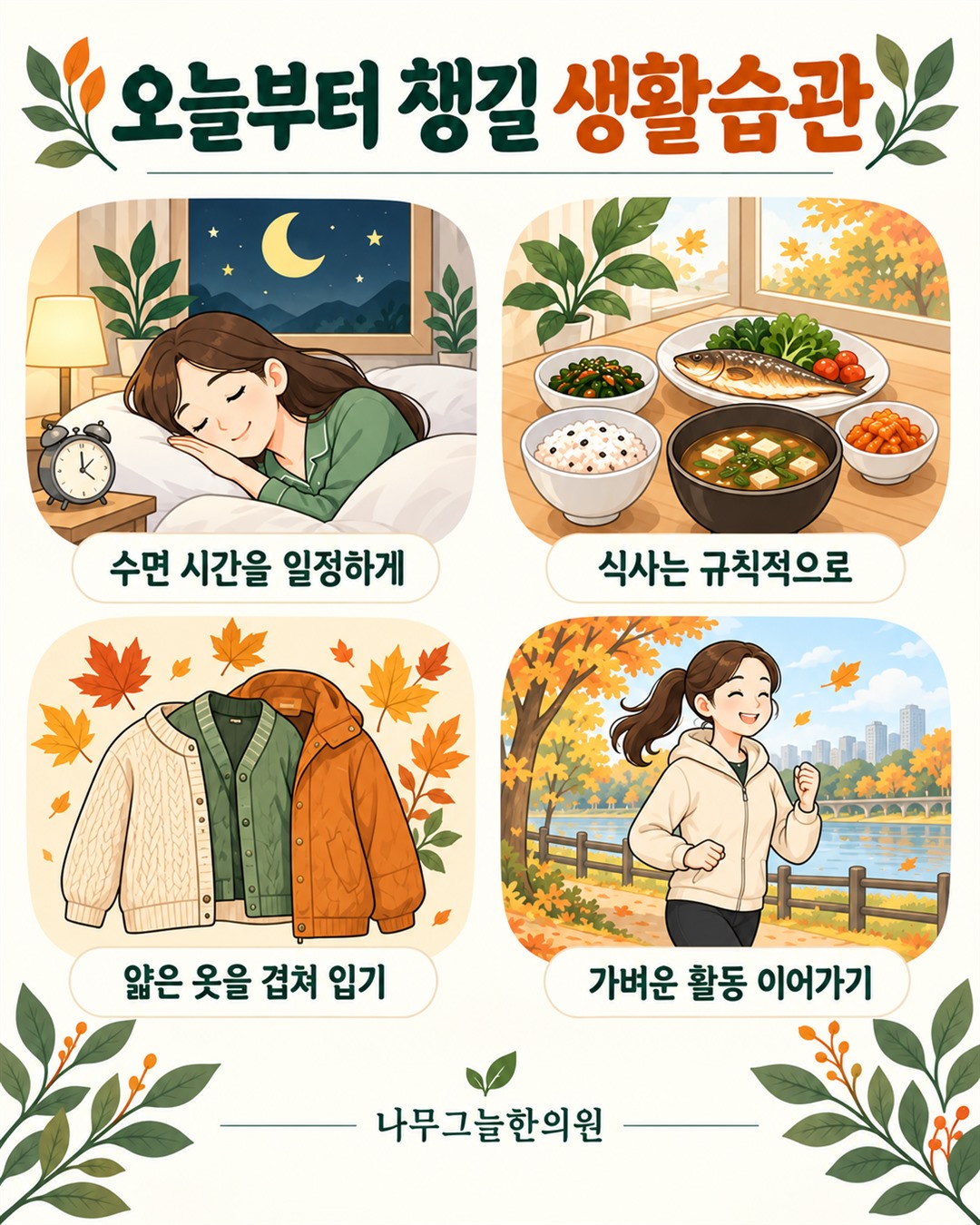
Check whether you have been sleeping too little, skipping meals or eating a large dinner. Keep a regular bedtime and eat meals that are comfortable to digest. A 2015 study that measured sleep before exposing healthy adults to a cold virus found a higher likelihood of developing a cold among shorter sleepers. Traditional Korean medicine describes caring for daily habits to maintain health as yangsaeng.
Wear thin layers and adjust them to the temperature. Continue gentle walking when you feel well; with fever or severe body aches, prioritize rest and symptom assessment.
Original Korean illustration; the guidance is translated in the text below.
02
Managing dryness and hygiene
Drink adequate fluids and check whether indoor air is excessively dry. Replace humidifier water daily and clean the device as instructed by its manufacturer. Reduce humidification if windows develop condensation or nearby surfaces become damp.
A 2019 animal study found that low humidity affected airway clearance, antiviral defense and tissue repair. A 2023 Cochrane review reported fewer people experiencing acute respiratory infections in groups with enhanced hand hygiene. Wash your hands after outings, before meals, and after blowing your nose or coughing.
03
A cold or allergic rhinitis?
Colds are caused by viral infections. Repeated sneezing and a runny nose accompanied by itchy eyes or nose, especially in particular environments, may suggest allergy. Record when symptoms begin, where they worsen, and whether fever or cough is present.
If congestion or cough recurs despite daily care, seek an assessment of the cause. Mention accompanying changes in sleep, appetite, digestion and fatigue.
04
What does a Korean medicine consultation assess?
Traditional terms such as wind, cold and dryness describe symptom patterns related to environmental changes. The protective function of the body is traditionally described as defensive qi. These are traditional explanatory concepts.
The clinician considers chills or heat, body aches or sore throat, watery discharge or dry cough, and sleep, appetite and digestion together. Pattern identification combines these findings to guide treatment.
05
Research on So-cheong-ryong-tang
So-cheong-ryong-tang, also known as Xiaoqinglong decoction, is an herbal formula considered for allergic rhinitis with watery discharge, sneezing and congestion. Accompanying cough, phlegm and general health are also assessed.
In a 2019 multicenter randomized double-blind placebo-controlled trial involving 154 Korean adults with perennial allergic rhinitis, four weeks of treatment improved nasal symptoms and rhinitis-related quality of life compared with placebo. A 2022 systematic review of 24 randomized trials also reported improvements in total nasal symptoms, discharge and congestion with the formula alone or alongside conventional medication. Tell your clinician about existing conditions, medicines, pregnancy or breastfeeding.
06
Research on acupuncture
A 2013 multicenter randomized trial in Korea and China assessed 238 patients with allergic rhinitis. After four weeks, the acupuncture group had a greater improvement in nasal symptom scores than the sham acupuncture and waiting-list groups.
A 2022 systematic review of 30 randomized trials reported improvements in symptom scores, quality of life and rescue-medication scores compared with sham acupuncture. Treatment selection considers current symptom severity and response to previous care.
07
Combining daily care with treatment
Record recurring symptoms and their course, and discuss them during consultation. Seek immediate emergency assessment for difficulty breathing or persistent chest pain or pressure. A fever or cough that improves and then worsens also needs medical assessment.
This is general health information and does not replace an individual diagnosis or treatment.