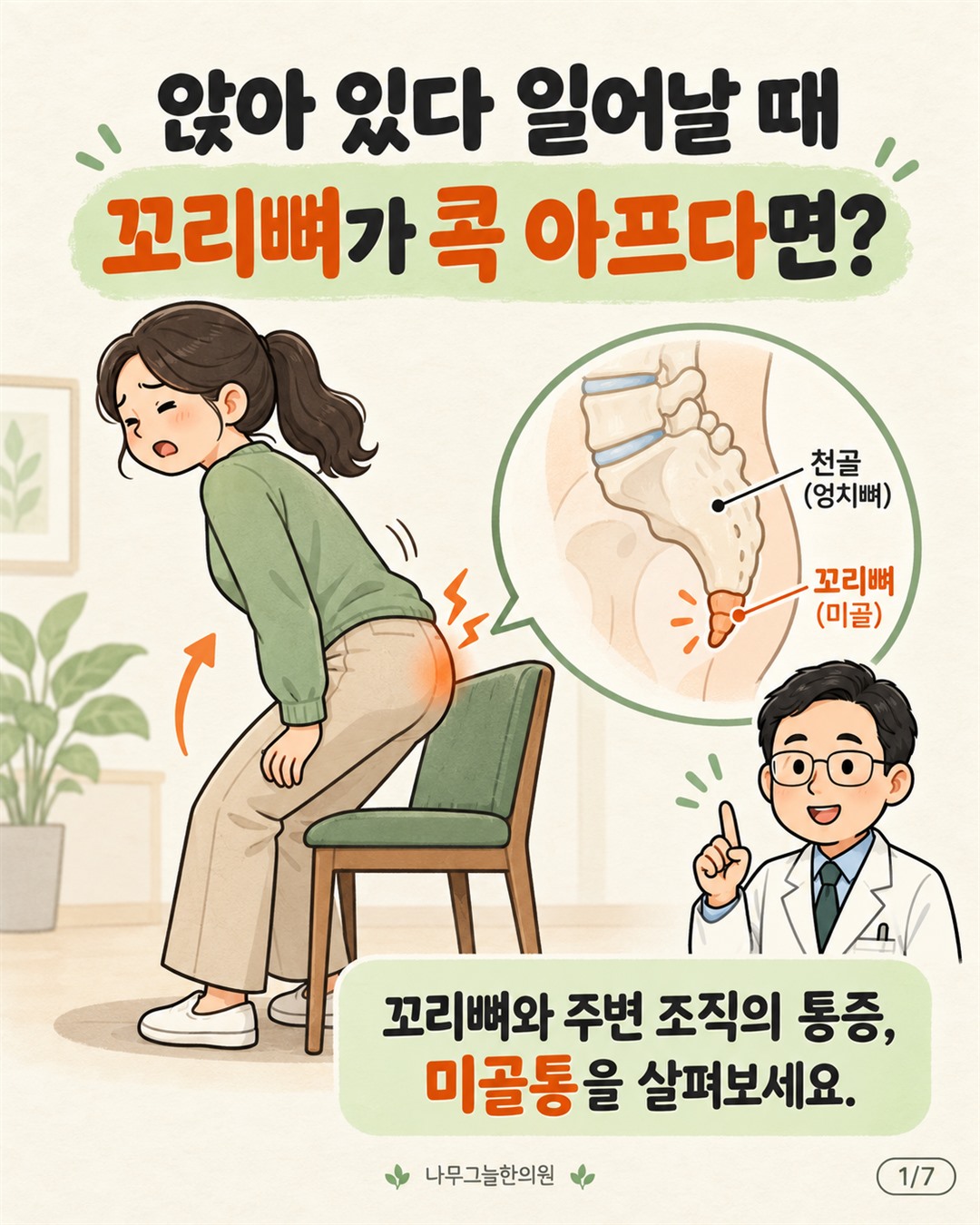
A sharp tailbone pain when getting up from a chair?
A heavy ache in the middle of the buttocks while sitting, followed by a sharp pain on standing, can be coccydynia: pain in the tailbone and surrounding tissues. It can follow a fall, prolonged sitting or childbirth, so the location and accompanying symptoms need to be assessed together.
Support your lower back when sitting and get up regularly to change position. A coccyx cushion with a cutout at the back can reduce direct pressure from the seat. If lying on your back presses on the painful area, rest on your side. Do not press hard on the sore spot or force a stretch.
The cover text is Korean. The article below explains the information in English.
02
It can hurt even without a fall
Falls onto the buttocks, repeated pressure during driving or cycling, the strain of childbirth and changes in tailbone joint movement can contribute. Sometimes there is no clear trigger. Pain alone does not establish that a bone is out of place. Examination considers when it began, the tender location and how sitting and standing change the pain.
03
Similar symptoms can have other causes
Tenderness directly over the midline tailbone differs from tingling that spreads from one buttock down the leg. Symptoms spreading into the leg also call for assessment of other causes, such as irritation of a nerve in the lower back. Skin swelling, discharge or fever, and anal pain or bleeding, should not simply be attributed to coccydynia.
A 2005 report described two hospitalized patients with chronic coccydynia whose pain, assessed using VAS, and symptoms improved after combined acupuncture and Chuna manual treatment.
A 2009 report of one 27-year-old woman with postpartum coccydynia described improvement in pain, everyday discomfort and ODI after herbal medicine, acupuncture and Chuna together. It did not evaluate herbal medicine alone.
Placental pharmacopuncture in a specific nerve-entrapment pattern
A 2019 report described two patients whose tailbone pain was considered to arise from perforating cutaneous nerve entrapment. Pain scores decreased after Hominis placenta pharmacopuncture. These cases concerned that specific nerve-entrapment pattern and preparation.
Match manual treatment to symptoms and examination
The techniques differed between reports. Rather than simply pushing the tailbone back into place, it is important to use appropriate manual treatment matched to the patient's symptoms and examination findings. Korean medicine research on coccydynia mainly consists of case reports; treatment is selected according to the cause and clinical findings.
08
When to seek care
Seek assessment for severe pain after an injury, pain lasting several weeks that limits daily life, or fever, swelling, discharge or rectal bleeding.
If pain recurs whenever you sit or stand, work and travel can become uncomfortable. We ask about and examine the painful location, movements and accompanying symptoms, including uncomfortable movements you may not have mentioned, to plan care.