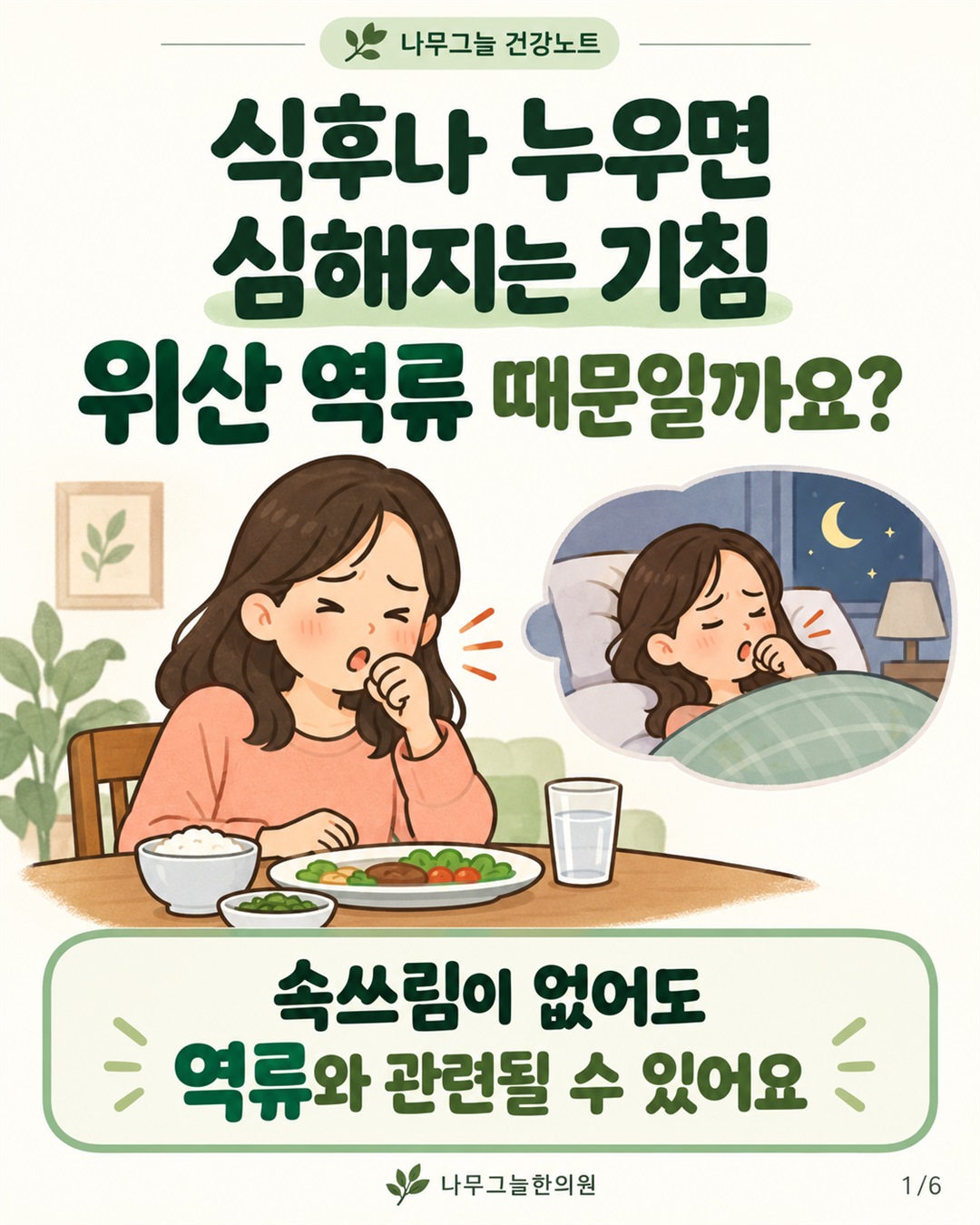
Cough after meals or when lying down: could reflux be the cause?
A tickling throat after meals or a cough that worsens when lying down can be related to gastroesophageal reflux. Stomach contents moving back into the esophagus can trigger coughing even without obvious heartburn or regurgitation. Recurrent symptoms deserve a look at meal and sleep habits as well as other causes.
Meal size and posture matter alongside food choices. Avoid eating within 3 hours of bedtime, reduce large meals and do not lie down immediately after eating. If coffee, alcohol or fatty foods repeatedly trigger symptoms, reduce those specific foods.
If overweight, gradual weight management can help. For nighttime reflux, use a wedge or similar support to elevate the whole upper body rather than stacking pillows that bend only the neck. Adjust recurring triggers instead of restricting every food.
The cover text is Korean; the article below provides the information in English.
02
Why reflux can trigger coughing
Reflux may occur when the barrier between the esophagus and stomach weakens or relaxes at the wrong time. Reflux material can irritate the throat, and esophageal irritation can trigger coughing through a nerve reflex.
Acid does not have to reach the lungs for coughing to occur. Less acidic reflux may also contribute, while coughing itself can provoke reflux. Noting which symptom starts first after meals or when lying down can help assessment.
Cough after meals or when lying down together with regurgitation or heartburn can suggest a reflux connection. A lump sensation in the throat or hoarseness may accompany it.
A blocked or runny nose with a sensation of mucus moving down the throat suggests rhinitis or postnasal-drip-related cough. Repeated cough at night, early morning, after exercise or in cold air also raises cough-variant asthma. These patterns are clues; duration, medicines and appropriate tests help determine the cause. More than one cause can coexist.
Herbal medicine: aiming to ease reflux-related cough
Prescribing considers coughing together with fullness after meals, regurgitation, throat dryness, sputum and sleep. A Korean pilot randomized trial compared Ojeok-san plus Saengmaek-san with placebo for 6 weeks in 30 adults with GERD and cough lasting more than 8 weeks.
The herbal group showed greater improvement in cough diary scores at some timepoints, particularly daytime cough scores, than the placebo group.
Three Korean cases with herbal medicine and acupuncture
A Korean report described 3 patients with suspected reflux-related chronic cough who received Ojeok-san plus Saengmaek-san for about 2 weeks, with one conventional acupuncture session at the first visit. Cough discomfort and cough-related quality of life improved during the reported course.
An 8-week randomized trial in 102 patients with reflux-related cough compared conventional acupuncture added to the same reflux medicines with those medicines alone. Daytime and nighttime cough scores and cough-related quality of life improved more in the acupuncture-plus-medication group.
In a study of 30 patients with GERD, diaphragm-focused myofascial release improved reflux symptoms and gastrointestinal quality of life compared with the control group. This research supports a possible role for manual treatment around the diaphragm in easing GERD symptoms.
Seek assessment for cough with breathlessness, blood-stained sputum, persistent fever, difficulty swallowing or unexplained weight loss. Sudden severe chest pain or difficulty breathing requires immediate evaluation.
For repeated cough after meals and at bedtime, consider digestive symptoms alongside throat and airway symptoms. Identifying the cause and adjusting habits and treatment can help reduce recurring discomfort.
Weekdays 09:00–20:00, lunch 13:00–14:00. Saturday 09:00–14:00 without a lunch break. Closed Sundays and public holidays.
Building mechanical parking accommodates vehicles up to 2,000 cc and may be difficult to use after 17:00. Up to 90 minutes of parking support is available at Seokjeong-dong public parking.