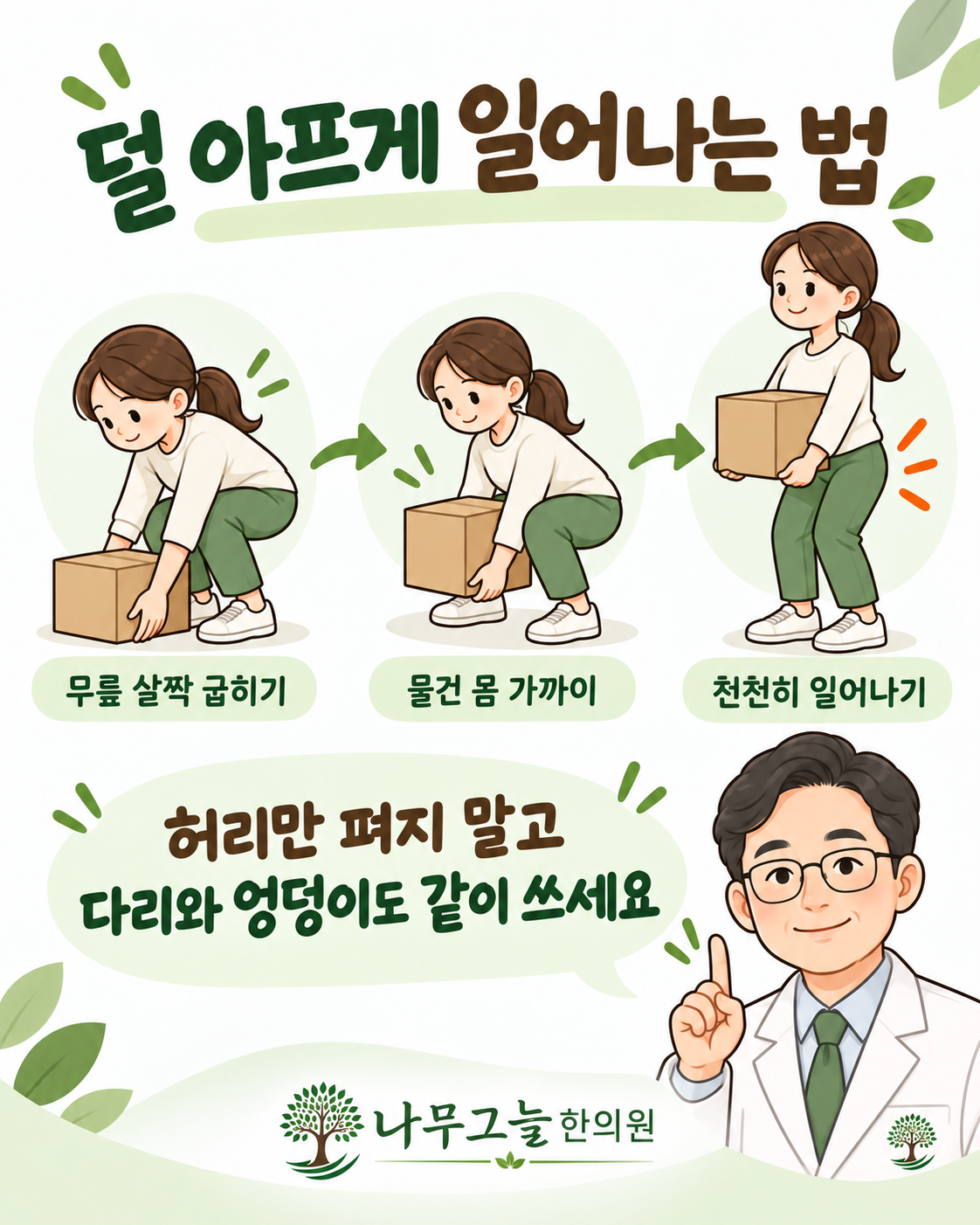
Why your lower back hurts when straightening up, and how to rise with less pain
‘Bending down is fine, but it hurts when I straighten up.’ Overload of the back extensor muscles, including the erector spinae, is one possible explanation to consider. This movement alone cannot establish muscle pain or a disc problem. Try rising slowly with your knees and hips, as if pushing the floor away with your feet, rather than suddenly straightening only your back.
While you bend, the muscles around your lower back help control movement speed and posture. The load while holding a bent position varies with how far you bend and what you are carrying.
To straighten up, the back extensor muscles produce force together with the buttock and leg muscles. After lifting something heavy or repeatedly using your back, overloaded muscles may hurt more during this effort.
Pain in a back muscle does not necessarily mean that your back is weak. More activity than usual or insufficient recovery may also matter. The lower back, pelvis and hips move together; assessment considers these movements as well as where it hurts and whether there is tingling or weakness.
Start with small, slow movements and find a less uncomfortable way. Do not force yourself into a prescribed posture through pain.
1. Do not suddenly straighten only your lower back. Rise slowly without using momentum.
2. Use your knees and hips together, sharing the effort with your buttocks and legs.
3. Think ‘push the floor away with my feet’ rather than ‘lift myself with my back’.
4. If it hurts a lot, support yourself with your hands on your thighs or a firmly fixed sink edge. Check that the support is stable and not slippery.
Original Korean card: bend your knees, keep the load close, and rise slowly using your legs and buttocks rather than only your back.
03
How should I adjust lifting and rest?
The distance of a load, how you turn, and the balance of activity and rest also matter. No single ‘correct posture’ prevents all back pain.
5. Keep objects close to your body when lifting. Split a heavy load or ask for help if it is too much for you now.
6. Avoid twisting only your back while holding a load. Move your feet to turn your whole body.
7. Acute back pain does not mean you should stay in bed for long periods. Continue short walks and light daily activity within tolerable limits. Reduce the effort or range if pain increases.
8. A heat pack may help with stiffness or muscle tension. Wrap it in a towel, avoid excessive heat, and take particular care over areas with reduced skin sensation.
This symptom alone cannot confirm either a disc problem or muscle pain. Extensor overload is one possibility; the pain's location, course and accompanying symptoms must also be assessed.
Pain spreading from the buttock down a leg, tingling in a leg or foot, reduced sensation or leg weakness can require assessment for nerve involvement. A clinician considers when it started, which movements worsen it and whether it is progressing.
If a disc problem is suspected or diagnosed, treatment choices depend on current neurological symptoms and examination findings.
Persistent pain or tingling down a leg needs assessment. Do not assume the following are ordinary muscle pain.
Reduced sensation or weakness in a leg or foot, especially progressive neurological symptoms, needs prompt assessment.
Rapidly worsening pain, fever, chills or feeling generally unwell calls for prompt medical attention.
Back pain after major trauma needs assessment for injuries such as a fracture before self-care.
Go to an emergency department immediately for sudden difficulty passing urine, loss of bladder or bowel control, or loss of sensation around the perineum.
06
Chuna care information
Symptoms and movement are assessed before deciding whether treatment is appropriate and selecting a method.
Monday–Friday 09:00–20:00; lunch 13:00–14:00. Saturday 09:00–14:00, without a lunch break. Closed Sundays and public holidays. Check temporary closures and registration cut-off times by phone or on Naver Place.
Mechanical parking in the building is available for vehicles of 2,000 cc or less; access may be difficult after 5 pm. If building parking is unavailable, use Seokjeong-dong Public Parking (7 Jungang-ro 367beon-gil, Anseong-si). The clinic supports up to 90 minutes of free parking.
Adapted from the Korean article. The reference supports general self-care and warning signs; it does not establish the cause of pain during a particular movement. This information does not replace individual diagnosis or treatment.